

As human beings we crave certainty. This is why we enter into mortgages, marriages, and secure jobs for decades on end. Unfortunately, any investor into the stock market will know that you do not have this luxury when trading shares. Announcements occur, remarks are made, planes fall out of skies and CEO’s get caught doing the wrong thing – with this, prices can move substantially in a flash. In my 30 years of trading markets, one thing I can attest to remaining profitable over this time is knowing when key events are happening in the stock market and the economy in advance. Of course, there are always unforeseen events which occur without any prior knowledge, however, there are most definitely some dates you should pencilling into your trading calendar and here’s why.
Firstly – what is a trading calendar? Well as the name would suggest, this is a calendar you build out where you list out all of the important upcoming dates. These can be company specific, like earnings announcements or dividend dates given they are scheduled usually months in advance, or it can be broad market – like the release of an inflation report, which is yet again scheduled months in advance. Sometimes these can even be as simple as trading holidays, which surprisingly enough do have a material effect on stock prices.
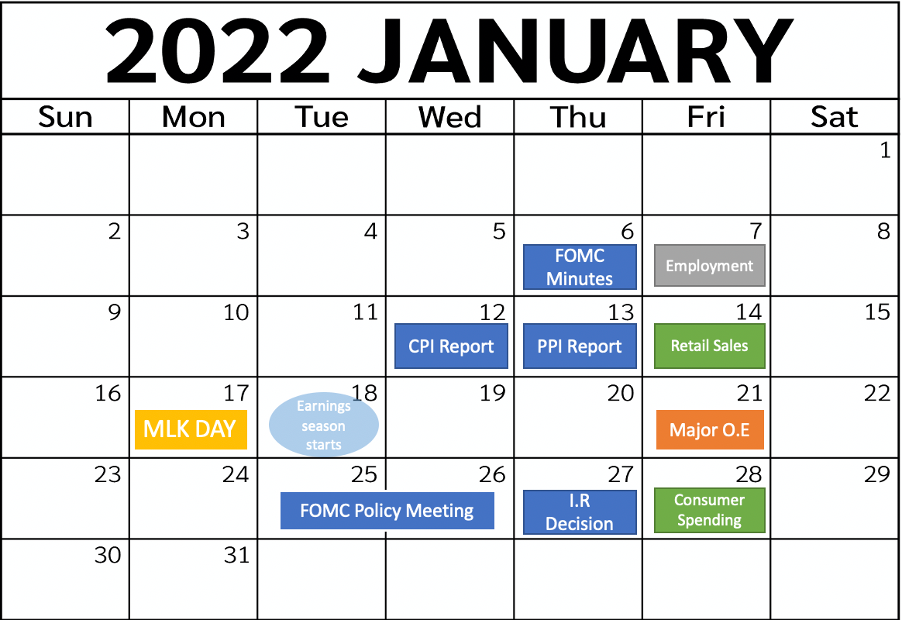
Let’s take an example and say you own five blue chip Aussie shares. Importantly, I’d be looking to create a calendar at least one month beyond where you are now for those businesses. When do they go ex-dividend? Do they have an earnings announcement? Are there any upcoming corporate actions? A simple google search to the company or ASX website will allow you to input these events. Next, your task is to input any key economic announcements or reports – these are events like the RBA policy meeting (the first Tuesday of every month), inflation report release dates, trading holidays, elections, employment reports and so forth. All of these events can give investors insight into the strength of the economy or indication where interest rates will likely move – which can have a material effect on share price. Knowing this in advance is key. Here’s an example trading calendar I made earlier in the year for the broad economic events in the US:
My last and final suggestion in all of my experience trading markets, is to keep consistent. It is important that you don’t just build a trading calendar for one month, rather, you do this every single month. Knowing when things are happening can allow you to make better informed decision on when to buy, what to buy and why. Also knowing when volatility is likely to pick up can be critical for your risk management, otherwise known as allowing you to sleep at night whilst your hard-earned capital is at work. For more insight on how to build your own trading calendar and some strategies to profit from this, reach out to my team at Australian Investment Education to learn more: http://bit.ly/aie-mjb
Frequently Asked Questions
1. What is a trading calendar in the stock market?
A trading calendar is a schedule of key market events such as earnings announcements, dividend dates, central bank meetings, inflation reports, and market holidays. Traders and investors use it to prepare for periods of potential volatility.
2. Why is a trading calendar important for investors?
A trading calendar helps investors anticipate events that may impact stock prices. By knowing key dates in advance, investors can better manage risk, avoid surprises, and make more informed decisions.
3. What events should be included in a trading calendar?
A complete trading calendar should include company earnings, ex-dividend dates, economic data releases, central bank meetings, elections, and public market holidays. These events often drive short-term market movement.
4. How do economic announcements affect the stock market?
Economic announcements influence expectations around inflation, interest rates, and economic growth. These factors can cause short-term volatility as traders reposition based on new data.
5. How far in advance should I plan a trading calendar?
Most investors plan their trading calendar at least one month in advance. Active traders may extend this to several months to prepare for earnings seasons and macroeconomic events.
6. Can market holidays affect stock prices?
Yes. Market holidays can reduce liquidity and trading volume, which sometimes leads to increased volatility before or after the holiday period. Traders often adjust positions around these dates.
7. Can learning trading or investing help me use a trading calendar better?
Yes. Understanding how markets react to scheduled events such as earnings announcements and economic data can significantly improve decision-making and risk management. If you want to learn how professional traders plan around these events, you can explore structured education programs at Australian Investment Education which covers trading, investing, and market strategy frameworks.
8. What should I look for in a stock market investing or trading course?
A strong investing or trading course should cover market fundamentals, risk management, portfolio strategy, and how to interpret economic events that impact price movement. You can explore structured learning pathways in AIE Trading & Investing Courses to understand how experienced traders approach market events and strategy development.